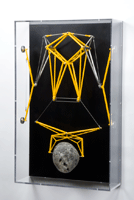
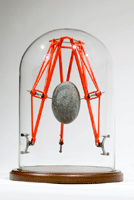
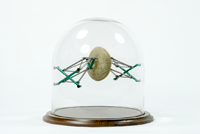
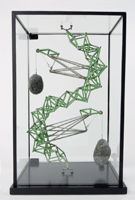
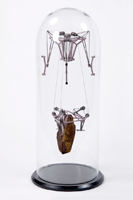
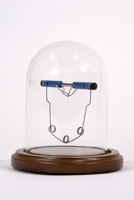
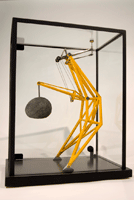
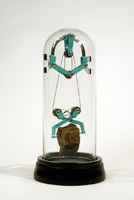
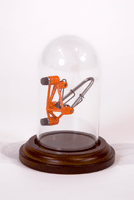
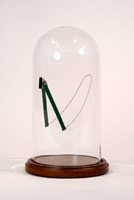
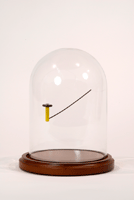
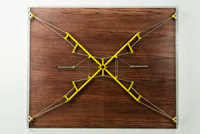
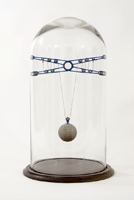
Interfloor Mechanism #1. 2011. Mixed. 120"(variable) x 96" x 10" Piece is a spring loaded mechanism that wedges itself between the floor and ceiling, holding itself up. |
|
Bottle Mechanism #3, 2010. Mixed. 22 " x 22 " x 12". Piece consists of two parts joined together with bicycle brake cable: the mechanical base, and the mechanism that fits inside of the bottle. The weight of the bottle, and the piece inside the bottle, maintains enough tension in the system as a whole to keep the mechanism inside the bottle expanded, bracing itself in the center of the bottle. This tension also keeps the bottle from dropping any further. |
|
Cavity Mechanism #7 w/Glass Dome. 2010. Mixed. 10 " x 5 " x 5 ".
Piece is a counterweight driven mechanism that wedges itself into inside of a cavity (the glass dome in this case), suspending itself. |
|
Column Mechanism #1. 2009. Mixed. Approx. 62" x 22 " x 16 ".
Piece consists of a central tensioning mechanisms and eight "satelite" contact objects, in pairs. Tension created from central mechanism is run through pulleys on each pair of "satelite" objects, pulling them together, creating tension that squeezes column and supports central piece. |
|
Cavity Mechanism #6 w/Glass Dome. 2009. Mixed. 20 " x 10" x 10".
Piece is a pair of spring loaded mechanism that wedge themselves into the inside of a cavity (the glass dome in this case), suspending themselves. Cable running between pair maintains tension on both mechanisms. If cable were to fail, both mechanisms would fall. |
|
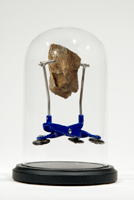
Cavity Mechanism #5 w/Glass Dome. 2009. Mixed. 6 " x 6 " x 6 ".
Piece is a spring loaded mechanism that wedges itself into inside of a cavity (the glass dome in this case), suspending itself. |
|
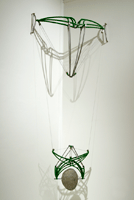
Corner Mechanism #4. 2009. Mixed. 72" x 36 " x 36 ".
Piece is a counterweight driven mechanism that wedges itself into the interior of a corner, suspending itself. |
|
Cavity Mechanism #4 w/Glass Dome. 2009. Mixed. 12 " x 9 " x 9 ".
Piece is a counterweight driven mechanism that wedges itself into inside of a cavity (the glass dome in this case), suspending itself. |
|
Cavity Mechanism #3 w/Glass Dome. 2008. Mixed. 8 " x 9 " x 9 ".
Piece is a spring loaded mechanism that wedges itself into inside of a cavity(the glass dome in this case), suspending itself. |
|
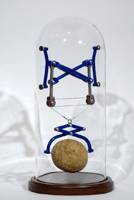
Cavity Mechanism #2 w/Glass Dome. 2008. Mixed. 7 " x 4 " x 4 ".
Piece is a counterweight driven mechanism that wedges itself into inside of a cavity (the glass dome in this case), suspending itself. |
|
Cavity Mechanism #1 w/Glass Dome. 2008. Mixed. 10" x 7" x 7".
Piece is a spring loaded mechanism that wedges itself into inside of a cavity (the glass dome in this case), suspending itself. |
|
Bottle Mechanism #2, 2007. Mixed. 42" x 20" x 20". |
|
Glass Mechanism #1, 2007. Mixed. 30" x 36" x 12". Piece is installed on glass "fin". Rock disc counterwieghts on both side cause mechanism to pinch rubber pads together on glass. |
|
Corner Mechanism #3, 2007. Mixed. Variable dimensions. Roughly 60" x 20" x 8" when installed. Piece consists of a base and an upper mechanism connected by 6 sets of cables. Upper mechanism is installed in a corner at a height at which cables are taught, causing mechanism to compress springs and wedge itself in corner. |
|
Rosebowl Mechanism, 2007. Mixed with clear glass vessel. 17" x 28 " x 28 ". Similar to Bottle Mechanism #1 in concept, this piece includes a mechanical base, a mechanical "inside piece", and a glass vessel. |
|
![]() |
Concrete Mechanism #4, 2007. Mixed. Variable dimensions - shown approximately 96" x 130" x 8".
|
Channel mechanism #1, 2006. Steel, cable, concrete. 37" x 30" x 5". Another concrete counterweight piece. This time counterweight activates mechanism that expands horizontally to wedge four pads into an 8 in. channel. |
|
Set of Mechanisms #1, 2006. Steel, spring. Approx. 4" x 5" x 6". Currently set of ten, may increase to thirty. Designed to fit a range of different architectural features. |
|
![]() |
Bottle Mechanism #1, 2005. Various Metals, bottle, springs, brake cable, HDP. 14" x 14" x 14". Piece consists of two parts joined together with bicycle brake cable: the mechanical base, and the mechanism that fits inside of the bottle. When the bottle with the mechanism is atop the mechanical base, the combined weight maintains enough tension to keep the mechanism inside the bottle expanded, bracing itself in the center of the bottle. |
Diorama Mechanism w/Diorama, 2005. Mechanism: steel, spring. 4" x 8.5" x 2". Diorama: mixed. 10" x 10" x 15". Piece was made for The Diorama Show at Mission 17. Piece is a small spring loaded mechanism that expands to wedge itself between the two inside walls of the diorama. Diorama is a small room like box with drywall walls and a lit ceiling. Viewer has to look through a hotel door viewer to see inside. (Note: Documentation of mechanism was taken through viewer.) |
|
Parallel Walls Mechanism, 2005. Steel, Springs, Cable. 8’ x 15’ x 2’. Piece is composed of seven steel frames that telescope outwards. Two large, centrally located springs activate mechanism that pushes first set of frames, pulley system causes 2nd and 3rd set to telescope outwards based on the position of the first set. Piece exerts enough outward force upon two parallel walls (roughly 15’ apart) to hold itself up. |
|
Corner Mechanism #2, 2005. Steel, Cable, Concrete. Top: 8” x 20” x 10”, Counterweight: 10” x 4” x 4”. Piece is installed on a 270°, drywall corner. It has a hanging counterweight that energizes mechanism to claw into the drywall of corner. Top of piece is installed at roughly 8 1/2 feet. |
|
Drywall Mechanism #3, 2005. Steel, Springs, Cable. 11” x 6” x 7”. Piece is installed on drywall wall. It has a counterweight that presses points at opposing angles gently into the wall. If counterweight is lifted, springs retract points and piece falls off wall. |
|
Self-Installing Mechanism, 2005. Anchors re-engineered, 2007. Mixed media. 36” x 25” x 12”. Piece climbs wall to install itself. It drills and retracts its own anchors as it makes its way up the wall, leaving behind evidence of its role in its own installation. The height of the installation is determined by the length of the piece’s electrical cord. At a point the piece climbs far enough that it unplugs itself. |
|
Corner Mechanism #1, 2004. Steel, Springs, Brake Line, Variable height x 12” x 3”. Piece is installed in a drywall corner. Springs are located in bottom element of piece and tension is carried to top mechanism with bicycle brake line. Top mechanism expands and wedges itself into corner. |
|
Drywall Mechanism #2, 2004. Painted steel, springs, 15” x 11” x 11”. Piece is installed on drywall wall. It has centrally located springs that use bicycle brake lines to carry tension of springs to the outer mechanisms. Outer mechanisms have points that when tensioned simultaneously gently dig into wall surface. |
|
Drywall Mechanism #1, 2004. Painted steel, motor, springs, wood, 14” x 14” x 10”. Piece is installed on a drywall wall. Ideally, when motor is turned on opposing spikes shoot into the wall simultaneously to progressively strengthen its hold on the wall. *in reality, when motor is turned on piece has issues with gravity… |
|
Concrete Mechanism #3, 2004. Painted steel, springs, 10” x 10” x 2”. Piece is installed on a concrete wall. It has three hooks that when compressed fit into large pores or small holes on concrete walls. When released hooks press outward on inside walls of pore. |
|
Concrete Mechanism #2, 2004. Painted steel, springs, and cable, 20” x 4” x 10”. Piece is installed on a concrete wall. It has fine hook like points that hook into small pores inherent in cast concrete walls and pulls hooks in opposition.
|
|
Concrete Mechanism #1, 2003. Painted steel, 24” x 13” x 5”. Piece is installed on a concrete wall. It expands to wedge itself into man made crack on concrete wall. |